
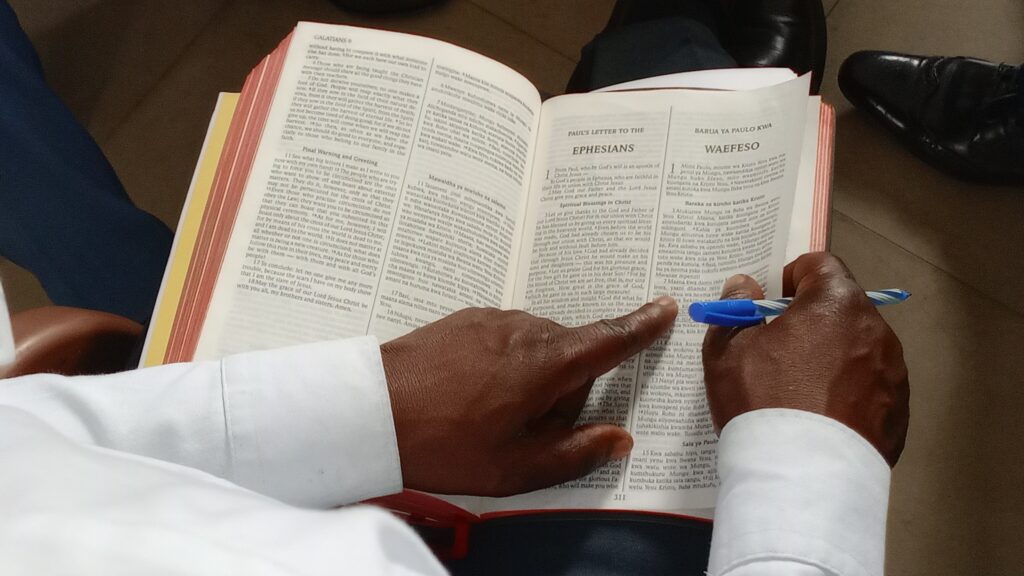
In March, Callum Henderson spent 2 weeks in the Democratic Republic of Congo teaching as part of the Comfort International Ministry School Programme (CIMS).
CIMS was set up in 2010 to provide free training for church leaders who could not access traditional church or university theology programmes because of financial constraints. Food and accommodation for attending students are provided along with class materials. All Church leaders are welcome at CIMS, women are especially welcomed to train and lead at CIMS.
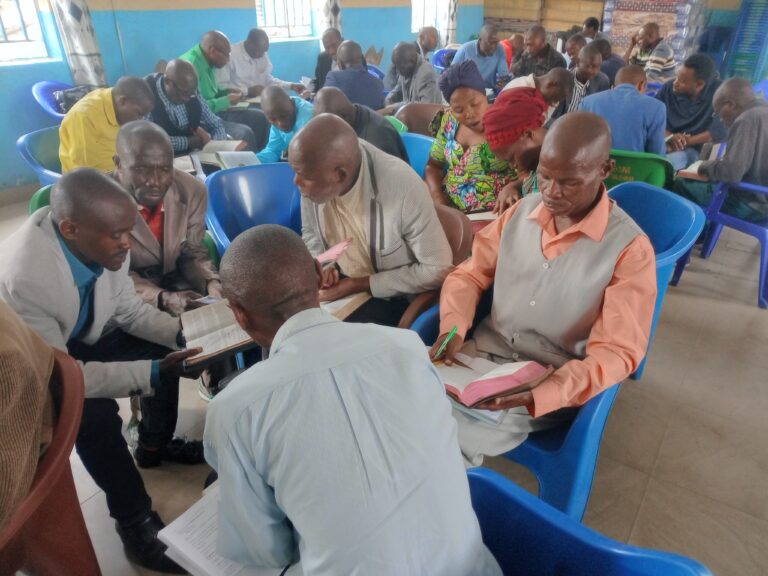
So here we are after the first day of CIMS waiting for dinner. About half way through the day I remembered I had left my phone in my room telling myself there was no need for it but forgetting Chris wanted pics for the blog. So the suspense will continue until tomorrow to know what a room-full of CIMS students looks like that’s different from before. The thing about CIMS is that one day is very much like another. You go in, you teach for four hours, you have rice, beans, banana and a bit of meat, you teach another 2.5 hours, you go back to Pere Pallotin accommodation, you have a wee break and then you prepare for the next day. Dinner has just arrived, so its rice, greens and rabbit. It should have most of the vitamin groups.
We are doing the money, sex and power module with today dealing with power/ servant leadership. The teaching of Jesus on leadership is so radically different from what leadership often looks like in the church but somehow we don’t seem able to break the temptation for being noticed, honoured, respected and titled – it’s an insidious temptation that we all fall for. Anyway, the rabbit is a bony specimen but I really don’t want to make its demise in vain so I’ll keep tugging. The teaching seemed to go quite well although some students are obviously tired after a very long journey. They have come from Rutshuru, Masisi, Nyiragongo, Rubaya, Kitchanga and it’s not travel in air conditioned plush car on tarmac roads they have endured for however many hours.
As always there are quite a few questions from students, but it’s good that they are all on topic – often questions can have been saved up for the teacher to answer from all kinds of issues students have been waiting to get a definitive answer on. Only, not all answers are definitive! So we got through the teaching, the students seemed to buy in to it and we prayed at the end for transformation and godly leadership with considerable participation. Not too much more to report – back to the rabbit and then prep for tomorrow and must remember that phone.
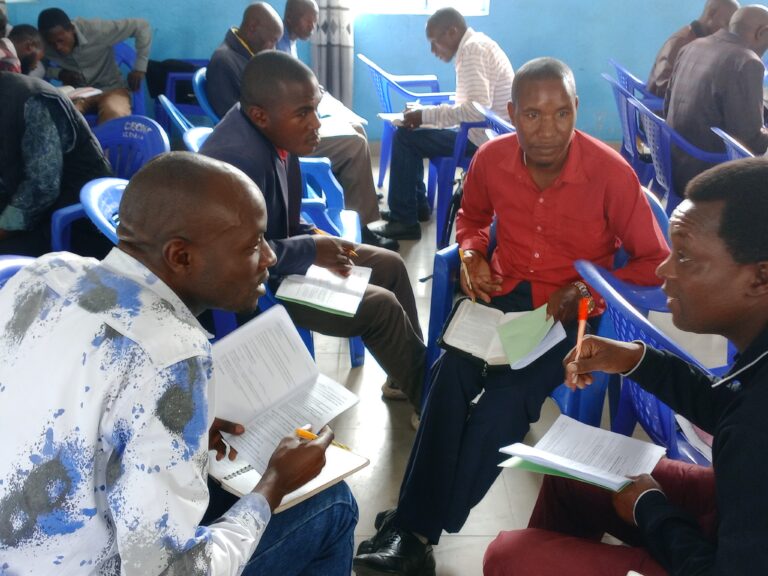
After signing off last night an electric storm blew in and with lightening every 2-3 seconds and waves from Lake Kivu crashing onto the shore there was quite a racket for while. Today the teaching was on finance and materialism. The key issue is getting the Old and New Testament hermeneutics right or we finish up with a confusing picture of wealthy patriarchs and kings in the Old Testament and then Jesus and the early church teaching something different. When we get the hermeneutic right we can see how Jesus and the new covenant fulfils the OT promise through the riches of grace and the blessing of the Spirit, so I’m hoping we managed to make progress today. There’s always an extra challenge teaching on money here as church leaders here are often considerably poorer than us who are doing the teaching and so avoiding glib clichés is very important.
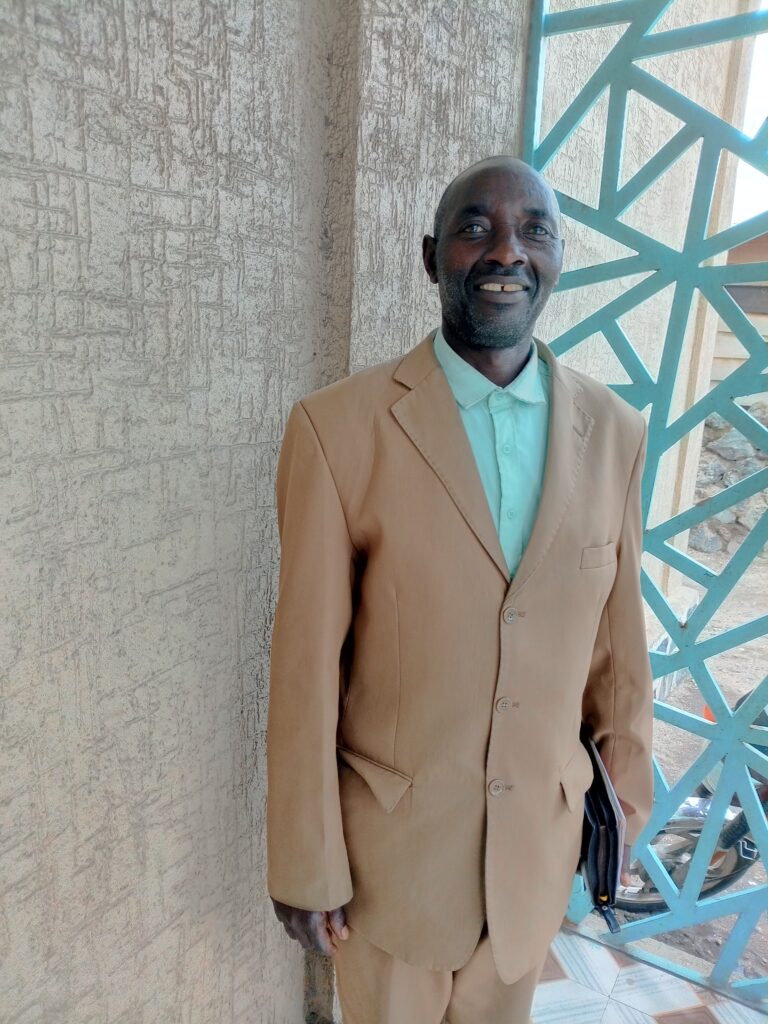
Remembered the phone for pictures and just trying to download. Working out whether I’m technically challenged or I just have a stubborn phone – no comments please. Anyway the first pictures were of a pastor from Kitchanga called Joseph.
Joseph comes from the area of Kitchanga in Masisi. He has arrived a day late because the new M23 government has introduced Umuganda, the public works that Rwanda has pioneered as a way of involving all citizens in the building of the country. Joseph’s Umuganda was on the Monday morning the teaching began so he then made the 50 mile journey by motor bike in the afternoon. The state of the roads can be understood by the length of time he took to arrive – a four hour ride for the 50 miles.
Joseph studied theology several decades ago but the intervening years of war have taken their toll. Often Joseph has had to flee for his life, often his home has been looted and destroyed. Sometimes he spent weeks on the run, staying alive ahead of the various armies seeking to kill and destroy. So he has lost all his notes, his books and even his bible, but remained faithful to God’s call on his life and now he seeks to be refreshed in his understanding of God’s word and renewed in his ministry. ‘I studied many years ago but have lost my notes and bible in past years, so now I want to relearn and be refreshed in my ministry. I started this teaching with you last year and it has been very helpful to restore my understanding of God’s word.’
Joseph’s church is growing. The church also runs a school, Zaburi school, meaning Psalms school, for the children of the community. But the church is presently roofless – ‘the church was bombed,’ says Joseph, ‘and when it rains the people who have come to church have to run away for shelter.’
Many of the families in the area have also suffered greatly. ‘The houses have been bombed by missiles, they have been burnt and looted, and boys in the church have been taken to be child soldiers and the girls raped. Many people have no proper roof on their home.’ For Joseph, the training is a welcome oasis in the midst of decades of war, looting, displacement and rape.
Came back to the seminary and spent time with Dieudonné discussing the option of a farming project up by Rutchuru, north of Goma. Just Earth are working with us to look at the possibility of a Kingdom based farming project in Sierra Leone which considers the four pillars of spiritual, economic, social and environmental transformation. I love that because it’s saying that how we farm is important to God because it’s His earth and the people on the project are more than just farmers but people with spiritual and social needs as well. So we’re looking at the option of a project here in North Kivu, DRC, with poor displaced families and possibly graduated child soldiers that will give them the land, skills and values to set up really successful farming plots.
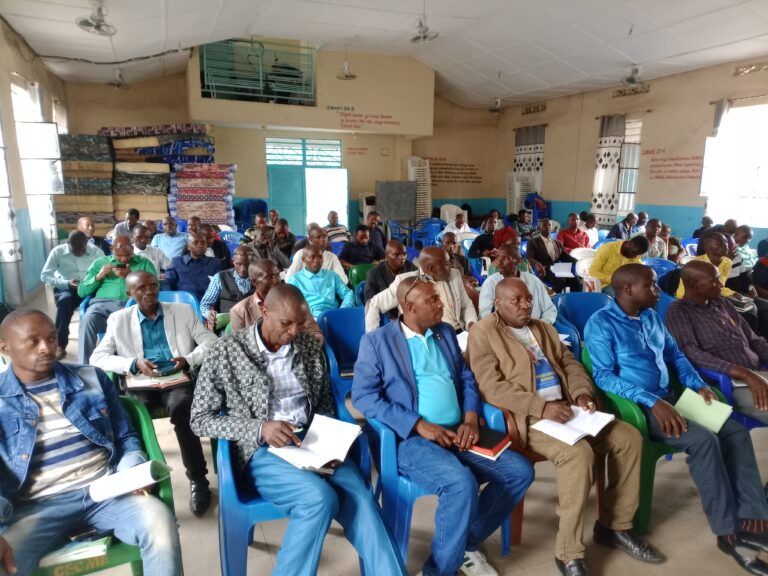
Back at the seminary after the day’s teaching – so annoyed i didn’t bring the binoculars – there are several birds just on a tree that I wish I could get a better look at! It thundered and lightening-ed again last night and rained most of the day. Thankfully the rain wasn’t too heavy on the roof to require us to stop teaching and the temperature is quite cool so that keeps everyone awake after lunch, so the weather has worked out fine. I have had the phone (i.e. camera) with me today but the weather has been so dull the poor light meant any indoor pictures were not really any use.
Dieudonné disappeared about lunchtime to try and sort out the boat to get down to Bukavu but hadn’t returned about 3-4 hours later and I gather it is quite a challenge as the port can be very busy and quite chaotic. We have thought about taking the overnight bus but the biggest problem is both Goma and Rwanda have Umuganda on Saturday so we would struggle to travel in Rwanda and would need to get out of Goma into Rwanda the night before. The amount you pay for the boat determines which boat you get and where you are put, so it can be everything from three and half hours with seats to seven hours sitting on sacks of potatoes or cassava. We’ll see what Dieudonné comes back with!
The teaching went fine – we finished off money and started on marriage, family, sex. Tithing is a big issue in African churches and I try to cover origins of tithing and then New Testament teaching (that indicates the tithe may not be binding on Christians (and certainly not manipulated out of them!)). The response is often quite vibrant but I try to leave them to make their own decisions on this so that they have thought it through carefully. Other than that things went quite smoothly.
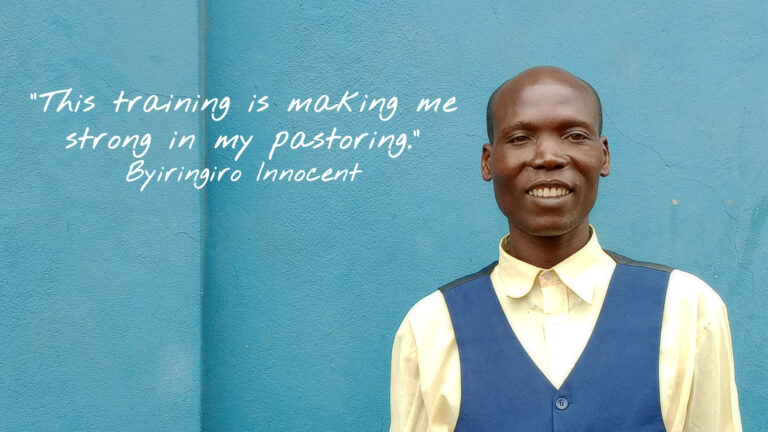
I spent some time talking with Byiringiro Innocent, one of the students. He said, ‘I come from the hill country of Kashuga which is past Kitchanga and a long way away. My village in the hills is in the area where the Wazalendo and M23 are fighting so I am displaced and living in a home of branches and thatched grass away from my village. I was a choir-leader in a church and then became a deacon and then a pastor but I have not been to any theology training except this. But I had a school diploma in pedagogy so I started a church and a school. 90% of people in my area don’t go to school so we wanted very much to have a school and we persuaded someone to buy us 40 sheets of iron for the classroom roofs but we need to pay him later. But the village is not safe as the Wazalendo are there so we cannot reach the church or school now. There were seven of us who came from the area. We came on motor bike but about 20 kms after we began we met the Wazalendo. We ran into the forest but they caught us and stole everything – our belongings and the money we had to get the motor bikes to the training. Four of us disappeared and I do not know where they are but three of us got back to the road and found the motor bikes and drivers. But we had no money to pay the drivers so the other two decided to walk 20 kms home. But I said, ‘I must get to the training’ so I persuaded the motor bike driver to bring me here and said I would try and repay him somehow. It is very important I am here because I take the training back to my area and train other pastors with what I have mastered here. This training is making me strong in my pastoring. When you taught on ‘Blessed are the poor in spirit’ it inspired me very much and transformed me.’
Some lively discussions on issues like polygamy, singleness, gender relations etc. One student had heard some teaching along similar lines to what we teach on servant leadership mirroring Christ and the church – he had gone home and started serving his wife and doing lots of things to help her and the family, including pounding cassava bread etc. His family considered this crazy and accused his wife of poisoning him, started persecuting her and she then ran away and left him! ‘What should I do?’ he asks. Dieudonné was away all day taking part at the funeral of Karine Buisset, the UNICEF worker killed here by a drone a few days ago. He has so many commitments and is doing so many really significant things he blows my mind! He is working quite hard at the moment on bible translation work – there are several closely related languages to Kinyarwanda spoken around North Kivu without bible translations.
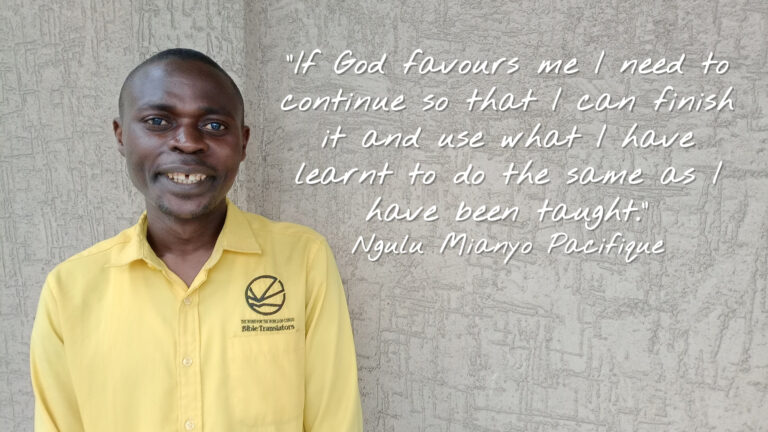
It’s been a busy evening with catching up on emails and whatsapp, funds for CIMS Burundi, and prep for tomorrow and Sunday. It looks like the boat journey will be around 7 hours but we can’t get tickets till tomorrow so here’s hoping and trusting we secure them! Not a lot else to report beyond the normal daily routine. Some more pics for Chris being uploaded. Ngulu Mianyo Pacifique told me – ‘I am from Sake and am an evangelist with the Eglise de Dieu Vivante (which is related to the Methodist church Dieudonné is with.) I am working with Word for the World to translate the bible into local languages. I heard about the Comfort Congo feeding programme and orphanage at Sake and thought, ‘It is better to be part of what they are doing helping widows and orphans. God is leading me to help them with that mission.’ I am discovering a lot of things from the training here. I have attended seminars in the past but they are not like the teaching here which is much deeper and has exams. I like it, when I get it I can’t leave it. If God favours me I need to continue so that I can finish it and use what I have learnt to do the same as I have been taught.’
That’s the first week of training finished. It was a bit of a helter skelter morning before leaving the seminary as there had been a mix up regarding a payment needed for Burundi and it was needed this weekend. Unfortunately the foreign exchange company we have been using would not accept the bank details, the other forex we use needed a message but the electricity had just gone off so no internet to send the message, but thankfully the payment has now been made! We were finishing marriage, gender, sex today – we invite the spouses for the last day and call it ‘enhancing marriage through encountering God’. I had hoped their would be more spouses as it makes it much more interactive and enjoyable, but there were not as many as hoped for. Anyway, let’s hope it has been a beneficial week.
I spoke to two pastors from Rubaya who have been at the training – one, Tumaini Rwabuze Theophile is the pastor at Maranatha Church but also works as the headteacher at Rubaya Kwetu school – a sister school to Marajeo which we are supporting the building of and Kalonji Kafonzo Jacques who pastors Rubaya Sayuni School. They talked of the landslips – ‘ There were landslides at three areas where many people live. Kachihembe had many houses and many many people died. It carried away the whole habitation and we found 150 bodies but there are many others who are still buried. At Cooperamma 4 people died. At Kashovu about 250 died. Those are the coltan mines, but there was also a landslide at the gold mine at Kasasa where 700 people died. We both lost family members. The most urgent thing is to help the widows and orphans and the poorest people. We are doing our best to minister to the population – we are trying to get food to them and when we do that we encourage them that they are not alone and there are other people who care for them. Both our churches have lost people who were killed. Even children from the schools were killed because two of the landslides were at night when they were not at school. Some children still go to the mines after school if the family is very poor. The schools have helped street children who were at the mines to be at school instead but some children whose families are very poor go to the mines after school. If we stop them going they go at night instead. If we can find a way to develop projects for the poorest people it could stop that.’
I spoke with Prosper, Neema’s (who does the Comfort Congo MEAL for the Income Generation Activities (IGA) project) husband and he says they have talked together and think an expansion of the IGA programme The Souter Foundation have supported, especially with wives of the teachers of Comfort Congo schools, could be considered for Rubaya. So that’s it for the day – it’s an early start tomorrow as we need to be at the port by 6.30am to make sure we get the ferry. Happy Days! Keep praying – some of the teaching goes better than other bits so both myself and Prosper, who is translating, need strength and anointing. Dieudonné is going to do some of the teaching with me in Bukavu which will be nice.
Today has mainly been spent travelling to Bukavu. Dieudonné and Prosper (my interpreter) were to pick me up from the seminary at 6am as the boat left at 7am so Izzy had woken in the night (3am) and called me on Whatsapp at 5am my time to say hello before I left. Thanks darling – I’d put my alarm on for 5.40! Dieudonné didn’t arrive until after 6.30 and we couldn’t get hold of Prosper but my fear of being late was not merited as the boat didn’t leave till 8am. Dieudonné had booked first class (he knows me well but not well enough!) so we had fairly overly comfortable seating.
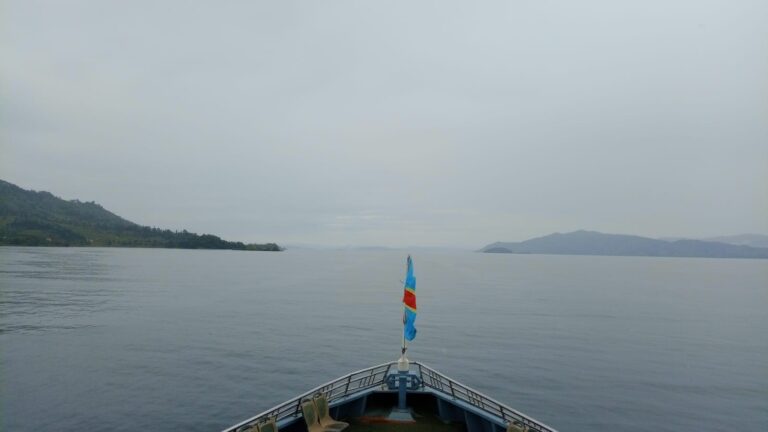
The journey was 6 hours. The scenery is very beautiful although it was very cloudy and not perhaps at its most amazing. We went round the back of Idjwi Island to make sure we stayed in Congolese waters. Bukavu came into sight around 5 kms before we reached but the Lake was already covered with plastic and rubbish long before we reached there – such a shame. There were seven or eight pastors/regional leaders there to greet us and negotiate for 15 minutes over what should be paid to the men who carried the notes for the lectures from the boat to the car. We arrived at the Swedish Pentecostal Mission where we had accommodation and had time to get to know the seven pastors. Only one had received any formal theological training, the rest had just had occasional seminars.
I try hard to get to know names but am extraordinarily poor at remembering, but there was Polycarp, Jean-Claude, Christine, Sifa, Gentille, Samuel, and another Jean-Claude. Not one of them had travelled for less than two days to be here, the majority for three, and Jean-Claude had travelled five days, much by foot, wading through rivers over his waist, using his meagre resources to pay his way through rebel army checkpoints and finally arriving after two further two days on the back of a motor bike. It’s absolutely mind-boggling what they will do to feed on God’s word. There is no food provided here so Dieudonné sent a couple of the pastors out to buy food which looks like it could feed a fair proportion of the city. A couple of ladies from one of the churches are cooking that now but food cooks slowly in Congo. Ah-ha ‘food is ready’. Ugali (sorghum and cassava thick porridge), fish, lenga-lenga greens and bananas in tomato sauce – time to go!
Today, being Sunday, has been a wee bit different! I was preaching today so had spent much of yesterday evening and earlier in the morning doing some prep. We were due to leave at 8am but by 8.15 the sun was shining and day warming up but there was no sign of breakfast or our lift and Dieudonné and Prosper were looking fairly unready for church. Dieudonne seemed unfazed, made some fairly ambiguous comments about when breakfast might be and suggested the lift might appear at 9am.
I carry a small travel kettle, so, seeing little prospect of movement till at least tea was available I boiled the kettle and moved things along. We left at 9.15 and then ran out of petrol going up a long hill. Thankfully there were a number of enterprising sellers of plastic bottles of petrol stationed at regular intervals up the hill – it was obviously a good place for the petrol business. As the road went higher the view over Lake Kivu opened up and it was a beautiful sight. We arrived around 10am and made our way down a fairly precipitous hill with narrow paths leading between mudbrick and tin roof houses and found church was in full swing. I went through the doorway into the church and was hit with a feeling of being a Sunday chicken popped in the oven for lunch as the low tin roof nicely cooked the congregation. The welcome was even warmer – what lovely, special people. The church was full, with people outside looking in the doors and the few windows.
We had around 30 minutes of introductions and then an hour and a half of choirs, followed by some more congregational based singing. There was a lot of energy put into this, the metal tins filled with beans or stones or whatever rattles loudest were being shaken with vigour. I joined a group of people dancing and tin-shaking and was seriously struggling to last the pace. There were quite a few women deeply and physically affected and shaking etc. during the praise – it is easy to write such manifestations off as over-emotionalism but I’ve learnt over the years that the women (and some men) who are involved have often got a level of authentic relationship with God and prophetic accuracy that it is best to avoid any scepticism. It was noticeable how many of the songs were contextually based in the time of war – ‘during the war, you are the One who takes care of us, Lord’, ‘There are Christians who cause conflict when we should love one another’, ‘during the war people can cry and pray but You are the One who brings peace,’ were a few of the different song lines from the various choirs.
There are many people praying for me for this trip and I really felt helped during the preaching from Jesus’ parables of the Kingdom. I find that so important as those people bless us so much it is horrible if you feel you’ve given them a duff sermon. But God was good and there was a positive response to the two final questions – ‘are you in the Kingdom?’, and ‘is the Kingdom growing in and through you?’. The service then progressed to the notices, always a major event in Africa with cheers and whoops for the most ordinary of church notices. There were quite a few of the CIMS students in the service and Dieudonné spoke at some length on the need to be on time so we’ll watch with interest. By 1.30 things had drawn to an end. The pastor has a wee house adjacent to the church and we shared potatoes and beans together. The rest of the day has mainly been catching up on unfinished Comfort work.
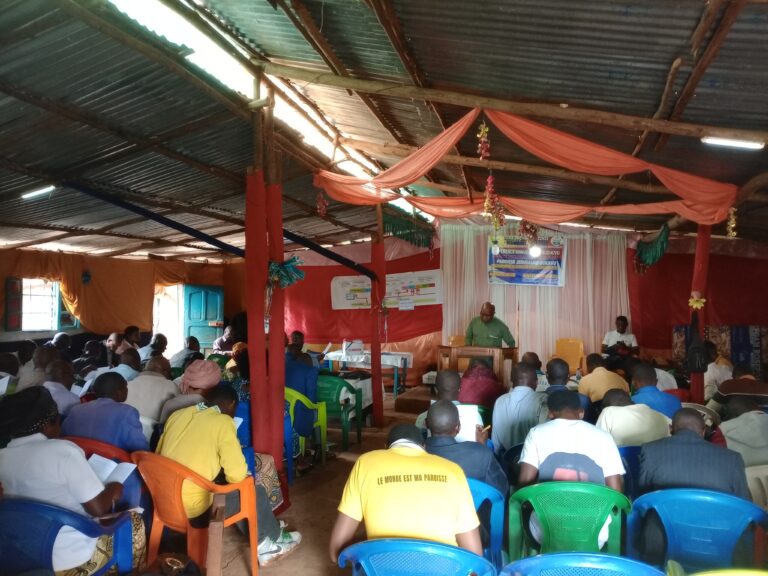
So that’s the first day of CIMS in Bukavu – Hallelujah! It looked like we were heading for being on time but various distractions made time disappear and we were 35 minutes behind schedule when we eventually got into the car. The driver turned the keys and the car went purr-purr-phut-phut and wouldn’t start. He continued to turn the key for the next fifteen minutes hoping that doing the same thing many times would eventually provide a different answer and when we had just got out of the car to find another one he was proved correct and it sprang into life.
We tanked along in the Bukavu morning rush hour at around 10 kms per hour and were just easing our way past a stationary taxi when a lorry cut us off and scrunched the passenger side of the car. Bukavu is a city of around two million, the streets are bursting with traffic, most of it yellow tuk-tuks or taxis and the lakeside is teeming with hills of sand deposited by boats and being dug and thrown by spade into lorries, the pavements are filled with street vendors selling petrol, air time and mobile money, mattresses being transported in large piles on various heads, piles of stones being broken by hammer into gravel, wooden tables with bread, juice, bits of meat and on it goes. We followed the lorry driver (oblivious or unconcerned but certainly not stopping!?) and after a kilometre he bundled his lorry onto the pavement to offload something and we drew alongside and our driver made our problem known. That proved ineffectual but a civilian clothed man with a firm stick and an authoritative hat intervened. I found out later he was one of the new government ‘spies’ or ‘gatherer of information’ but whoever he was he was effective and within 10 minutes US dollars and Congolese francs were being exchanged and off we drove.
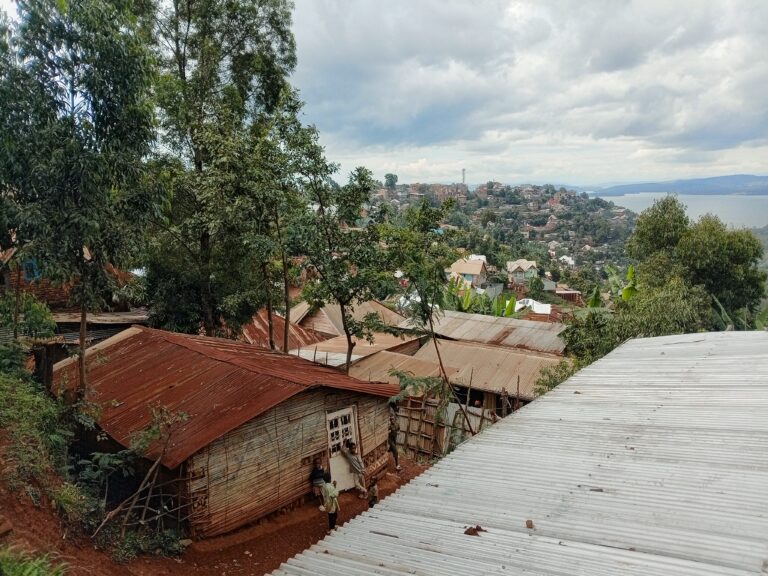
The drive to the church where the training is taking place takes us off the tarmac road onto the main road to Goma up the west side of Lake Kivu which is unpaved. We transition from the town centre with its packed streets and concrete buildings to the mud or plank built homes perching on the steep hillsides. Arriving 45 minutes late for the first day’s training was not ideal but it was good to see around 100 students already there. It was wonderful to finally be beginning the training in Bukavu. I went over the principles of CIMS and began the first lecture on The Story of Salvation in the Old Testament. After an hour I stopped, gave the students a ten minute break and handed over to Dieudonné for his 50 minute lecture. Two hours and fifteen minutes he was still going strong – the man is phenomenal. The notes gave him a number of Scriptures to mention but each Scripture became a launch pad for a rendition of an Old Testament story – a Scripture from Esther had Esther pleading for her people, Mordecai desperately seeking salvation for the Jews and Haman hanging from his own gallows, all in great detail with actions included; a Scripture for King David saw the battle between David and Goliath get louder and louder and louder till Goliath was vanquished, a Scripture from the Psalms became a full class praise time … The students love him so much!
It was noticeable how much was related back to the suffering and challenges of South Kivu at this time. The subject matter was the Old Testament story from the perspective of spiritual warfare – I’m not sure how much the students specifically grasped of the notes but they certainly knew by the end that Satan was defeated!! So we were two and a half hours behind time by lunchtime but nevertheless we got a decent amount finished by the end of the day. It was lovely to teach with Dieudonné, his passion is infectious and a good foil for the more methodical but less vivacious teaching of myself. It is clear that sound doctrine is an issue – there were a number of questions with ‘some preachers are saying…’ which indicated some fairly serious false teaching.
I like the breakfasts Chrystel makes in the morning – a boiled egg, a few slices of bread and a bit of honey works well for me. I do my sheep dog impression again this morning and we get away by 8.15. The petrol gauge warning light is on. We pass the masses of stalls and stools serving as shop fronts, pass the mounds of sand being dug and thrown onto lorries, pass the kid that should be at school but will sit all day hammering rocks into chips and when we get to the long hill the car starts to struggle and eventually the car and driver give up running on air and we get another bottle of petrol.
I begin the teaching this morning, continuing the Old Testament survey, and teach for an hour and forty minutes. I must have caught something off Dieudonné. But the students are amazing and they are still with me to the end. I’ve felt a lot of help from God the last couple of days and am so deeply deeply grateful for the many people who invest their own precious time to pray for me. I hand over to Dieudonné and after a while it starts to pitter-patter on the tin roof. The intensity of rain rises steadily and I’m glad it’s Dieudonné with his high volume voice and bomb proof throat speaking. However, the rain is truly stotting down and Dieudonné is only 6ft away and I can’t hear him. It’s unlike him but he gives up the fight and we do what Congolese Christians always do to fill a gap in time, we sing and dance and praise and shout. The rain gets heavier and I feel drops coming through the roof. The notes are getting wet and need shelter. The keyboard needs saved. But the drums are OK and the drummer puts the drum down on its side so that he can batter it from both ends and the beat continues. There’s an increasing number of puddles and burns in the room but eventually the rain calms back down to a spitter and we continue.
Dieudonné pushes on but misses out four lessons and starts on the major prophets. We’ll catch the missing lectures later. Lunch is an hour late because the food needed saved from the rain. There are larger than grapefruit brown and white balls of thick porridge, one in brown, one in white. The brown is the cassava and sorghum mix which we have had nearly every meal but the white is maize flour porridge and eaten with the fingers after dipping in an oily gravy. It’s good. I move on with the teaching and rescue the four missing lessons. The students are engaging really well and I’m impressed.
When we finish teaching I want to check some details of the journey Jean-Claude and Faida made to get here. Faida (actually Faida Matabishi Christine) sits down and tells me this: ‘We came from Shabunda which is far away. It’s a place of hills, and rivers and forests. Most of the people live in houses that are sticks and leaves. We live a hard life. Often there is no food and we have to travel for three days to get food. People came to where we lived and had a field and they started to mine. There is nothing you can do when that happens. You wake up in the morning and your house is starting to fall into the pit they have dug on your land. You cannot argue with them because they are too strong and dangerous. They are mining gold and coltan and cassiterite. The children clean the gold and don’t go to school. They go to the mines when they are 10 years old. We have to walk the first part of our journey. The way is full of rivers and we have to remove our clothes and wade over the rivers. There are many barriers for the rebels. You have to give them money or they beat you. They are traumatising the people they beat. Sometimes when the war is close we run and sleep in the forest, especially to avoid being raped as they rape many women. So we walked like that for five days and then we met a motor bike and came on the motor bike for two more days. So it took us seven days to get here and it will take us seven days to go home. I am a nurse but we don’t have medicine to treat people and they are dying like birds. We have a clinic which is built with leaves but we do not have medicine. It is difficult to get medicine so many people die and many babies and mothers die giving birth. Jean-Claude is the church pastor and I lead the women in the church. Many people have run away because of the war but we gather those who are left and the church is growing. Our congregation is widows and orphans and child soldiers and very poor Christians. One day when the Wazalendo and the M23 were fighting and we had run to the forest they burnt all our bibles. Many women were raped and I am trying to treat them but it is difficult without medicine. This Comfort International school is our first training. We came to the teaching when it started in Goma but now we are here. It is really helping us. We had a lack of knowledge knowing how to preach but today we know and this will help the believers to grow. We selected 15 people to come but 3 have managed to get here.’ What amazing people. What can we say that such amazing people have to endure life like that. It was time to leave and I walked out stunned once again by those precious people of Congo and struggled to hold back the tears. God, give us what we need to help those people
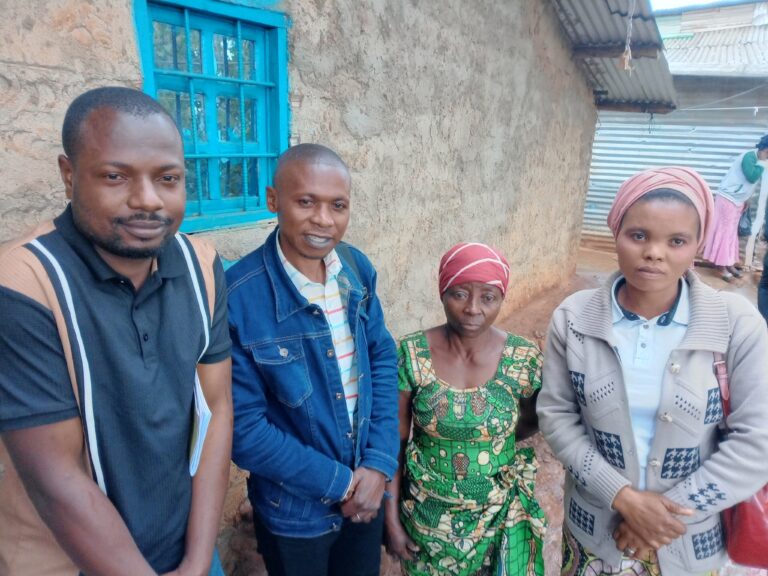
It was raining through the night and still raining when I woke up and by the time we got to the church at Bagira the path down to the church was pretty treacherous. There were paths down to some houses where people were having to use hands and feet to get down to them. I finished off the minor prophets and started the covenants. The students are amazing – they are lasting an hour and a half/ two hours for lectures as we keep trying to stay on schedule. I’d promised Prosper who is worried we’ll run over on Friday when we need to leave early to get home that we would be up to schedule by 10:50 and got there with 5 minutes to spare. Dieudonné took the next session and ran off with time like we were chasing a ball down a steep hill!
The thunder and lightening started up and a couple of enterprising students found some tin roofing at the back of the class and carried it out on their shoulders so that the ladies cooking had shelter and lunch wasn’t late again. It was back to myself teaching, and the rain intensified and forced an unscheduled break and the rest of the day was a fight with the clattering rain on the roof which we managed to outcompete for long enough to be on schedule by the end of the day. The roads in Bukavu town are generally paved, although with a good selection of impressive potholes. But the pavements are not and in general there is a lot of mud in the city that makes everywhere on a rainy day covered indistinguishable between tarmac and mud. There’s not a lot else to report – it’s been a fairly uneventful day. Maybe that’s a good thing!
Breakfast just keeps getting better. There’s eggs, water melon, chapatis, bread, honey, some kind of fried sausage – next time I come I will remember to encourage a downward adjustment of the breakfast budget. We’re just getting started when Chrystel’s (the lady from the church who cooks for us) brother arrives with a squawking upside down chicken which he hands to Chrystel. It’ll be chicken for dinner then. Chrystel has its neck rung before you can blink. Her brother and sister and mother join us for breakfast. As does the car driver. As does the pastor we are giving a lift to this morning. Three becomes seven and perhaps there’s not so much of a feast for breakfast as I thought. The Swedish mission we are staying in has worked well even if it is an hour away from the Bagira church where CIMS is taking place. There’s no running water at the mission from the taps but the toilets still flush most of the time and the lights work so that’s a win.
The sun is out this morning and the roads are quieter as the traffic flows better in dry weather. It’s good to see attempts being made to clean up the streets even if it means people have been hit by a three dollar tax per month for the bin lorries. Both Goma and Bukavu have introduced Umuganda every Saturday morning and Prosper says it has made quite a difference to the cities. We pass the furniture black market perched on the side of a hill adjacent to the road – everything here is on a hill! The main road in Bukavu has four lanes but the passing lanes each way are often empty whilst the inside lanes crawl along. Policemen stand in the middle of those lanes deciding who can use them and it boils down to the multitudes of red cross vehicles, security firms, official cars from universities or businesses, smart four wheel drives and sometimes not so smart looking four wheel drives and pretty much anybody who is not a taxi. About 80% of the traffic is the yellow tuk-tuks or taxis.
We’ve got away quite sharp as well so we make good time and arrive three minutes early. Hallelujah! This is the day that the Lord has made! We’re taking advantage of the exceptional endurance of the students and I teach for an hour and three quarters on the Davidic covenant, we have a 15 minute break and then Dieudonné does much the same for the new covenant. The morning goes well. Lunch is beans, rice, greens and potatoes. There’s also a few lumps of the ugali mixture of cassava and sorghum porridge that are reserved for the teachers and translator and one or two others but I pass on that as it has been a constant at every meal and I need a break.
The afternoon also goes well. We start the biblical interpretation studies and we leave the students with an exercise to do by tomorrow’s first class. The buzz in the car on the way back is that the Rwandan soldiers in North Kivu have gone back to Rwanda. It’s part of the peace plan with the US turning the screw. We’ll see what happens next but any major movement of forces into or out of an area is potentially a flashpoint for an eruption of conflict. Goma and Bukavu may not be in the control of the national government but things have been peaceful and secure for some time now and there’s always concern among the people here if anything happens that might jeopardise peace. It all depends if the withdrawal creates a virtuous cycle of peace or a spiral of opportunism among the wazalendo and FDLR. The mood is sceptical.
There’s also news of a terrible rape. We hear from a pastor from the Kalongi area, which is far away but quite a few pastors have travelled from, that the daughter of one of the pastors has been raped a few days before he was due to leave for the training. She is nine years old. She was fetching wood in the forest when she was attacked and raped by a group of soldiers. Nine years old, we think. Is there any limit to the depravity and pain and grief?
This will be my last night in Bukavu. It’s the longest I’ve been in DRC and I’ve even, with my terrible language skills, started to pick up a few phrases of Swahili. One of the three major ethnic groups in South Kivu are the Bashi who speak Mashi. It’s a Bantu language not desperately dissimilar to Kinyarwanda and we have a laugh as I throw in the odd Kinyarwanda phrase and they shout ‘Mashi!’. The internet was marginally better this morning and I got to speak to Izzy for a few minutes before the connection failed. As always I miss her rotten but she has been a huge support with prayer and love over the two weeks. She is a gem of a wife and being away for two weeks is tough. It’ll be dinner soon so I’ll sign off and wait to see what’s being served with the fresh chicken. Ugali will be there somewhere. There a pan of isombe, the leaves of the cassava plant, boiling over a charcoal stove and the people are exceptionally adaptive with using the leaves of yams, cassava, lenga-lenga, bitter (tastes as it sounds) and various other plant leaves. I’ve a few bits of flapjack Izzy made before I left home, still to be eaten, and there’s always a flapjack shaped corner left waiting to be filled after a meal!
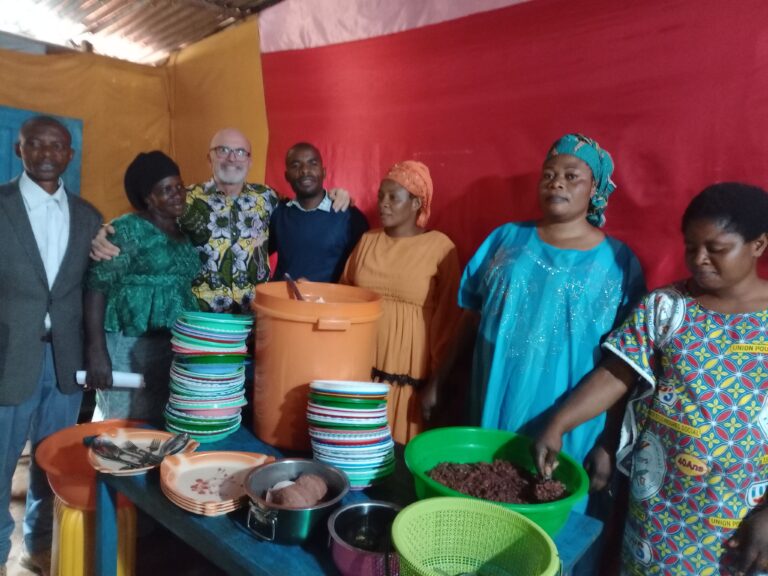
So that’s the two weeks of CIMS finished and praise God for an amazing and wonderful two weeks. There has truly been a real sense of God’s help, grace and counsel and I am so grateful for those who have been praying. My throat has been better than I can remember it for years during a teaching week (fortnight!), there have been no stomach problems which is great (!), but most of all the blessing of being with Dieudonné, Prosper and those amazing students has been wonderful. As ever the fun began at breakfast. With today being the last day every possible item of food was brought out onto the breakfast table – yams, chicken stew, mutoke bananas, sweet bananas, passion fruit, lemons and oranges, cassava and sorghum porridge (ugali), bread, chapatis, isombe (cassava leaves) and boiled eggs. We had decided, in order for us and students to have a decent go at getting home before the dangers of travelling in the dark we would finish at lunchtime so I knew we would have to push hard to get through everything.
Things were looking good for an early getaway and then we were joined for breakfast by four students (including Cizungu and Jean Claude who are part of the oversight). I think they sensed my urgency because all eight of us were squeezed into the car and away by 8.00 am. For the last time we drove up to Bagira through the bustle and industry of the streets of Bukavu. Every imaginable kind of goods are carried on heads – plastic bins of African doughnuts, planks of wood, sacks of sand, second hand clothes and shoes, bins of chapatis, basins of avocados, multiple trays of eggs, some drums and wooden spears, a dozen mattresses and on it goes. A couple of petrol lorries have arrived and the station courtyards are full of piles of yellow jerry cans being filled up form the pumps. The sun was out and as we climbed up the hill towards Bagira the sun sparkled off Lake Kivu. We arrived fifteen minutes early which was looking good but were suddenly met by a Birnam wood of 80-odd mattresses being carried by the students from the church to the road to be taken off for storage.
I had given the students a wee exercise to do overnight and they seemed to come back all ready to have it marked as an exam! So we went through the historical context of Amos and onto the Themes of Hosea and then did an outline of the prophet Habakkuk. They are exceptional students and after two and a half hours of teaching with a couple of minutes at one point to stand up and stretch they are still with me. What a good God! They have a break for a few minutes and then Dieudonné finishes the time we have with the prophets of the exile, Ezekiel and Daniel and we encourage them to read the notes we haven’t managed to cover.
Getting to the Goma Grande Barriere before dark is important for Dieudonné and Prosper and they are keen to be away by one o’clock. That’s looking possible. Cizungu, the overseer of the Church of Christ churches (an umbrella body for the Methodists and others) comes to front and wants to thank us. He is a lovely man – passionate, friendly, encouraging but firm. He says many lovely words and is genuinely gracious and enthusiastic before praying long life and blessing over us. There’s a queue of about a dozen women behind him who want to say something. The Africans love to give gifts and they are especially generous with the products of their tailoring. The woman leading them is Crystel, (our cook)’s mother. She has a speech written out. It’s in Swahili but there is an English version to take away. It’s an official speech and it begins with a recitation of the ministerial decree confirming the church’s’ status, full address, email and phone number to prove it. It’s specifically from the women who have been at the training. Amongst the warm and heart-felt and heart-breaking words it says, ‘We, the women and community of the Methodist Churches of South Kivu express our deepest gratitude to Comfort International and Comfort Congo for your presence and support among us despite the difficult circumstances we face. Your visit has been a true light in our lives, which have been marked by war, misery and violence. We sincerely thank you for the food, housing, prayers and love you have shown us, words cannot express our appreciation. We ask for your continued prayers and support, as the suffering remains great. Many women have been victims of sexual violence, numerous children have been forced into armed groups such as the Wazalendo, and our fields have been devastated by mining activities and ongoing conflict. We need your spiritual and moral guidance to heal our wounds and rebuild our lives. We pray that this bible school may continue to grow and form faithful servants of God. May the Lord abundantly bless all the benefactors of Comfort International for their love and generosity toward us. With all our gratitude and affection.’ There’s also a more detailed document which outlines the desperate situation in South Kivu where, ‘decades of war have created child soldiers, forced labour in the mines and abuse and trauma.’ It asks for help with education, vocational training, medical and psychosocial care for victims, child soldier rehabilitation and help for widows and vulnerable families. There are some lists of especially needy widows, orphans and war-wounded. It’s fundamentally a request to do in South Kivu what we are doing in North Kivu. We’ll take it to God and see what He says.
The group hand over a shirt each to Dieudonné and myself. His has a shepherd embroidered on it. Mine has a man cradling a baby. They explain: the man is me and the baby is the work in South Kivu. It’s hard again not to cry. We hug and say our goodbyes and walk out of the church into one of those African rain storms that soaks you through in a few seconds. We have to go all the way through Bukavu round the bottom of Lake Kivu to get to the border. Tuk-tuks are slipping and sloshing through the mud and water. The piles of jerry cans in the petrol stations are replaced by people huddling together under the shelter. We cross the border, get a taxi the seven kilometres to the bus station on the Rwanda side, realise we’ve no Rwandan money and Prosper jumps on a motor bike and goes off to get RWF. I buy my ticket for Kigali and the bus is revving up outside waiting on me.
We make our way through the mountains and forests of Nyungwe. There are road signs with monkeys – warnings to slow down for the wildlife, and my eyes are wide open but see nothing. The forest, though, is lovely to drive through. It’s a seven hour journey on a less than luxury seat. We didn’t have time for lunch before we left so when we stop for passengers I pass some money out the window buy a bunch of bananas. Eventually we are two miles from the Kigali bus station at 10pm and the traffic is at a standstill. Rwanda is constantly improving its roads and there are plans to dual this stretch but at the moment rush hour lasts till ten or eleven o’clock and it takes another half hour to get to the station.
That’s been a long seven and a half hours. I give Izzy a quick call. In the morning its pineapple and mango instead of ugali and yams, and a hot shower instead of a cold bucket of water. It’s a nice luxury but it will be a long time before my heart drags itself out of Bukavu. God always seems to do this when He wants to get my attention.